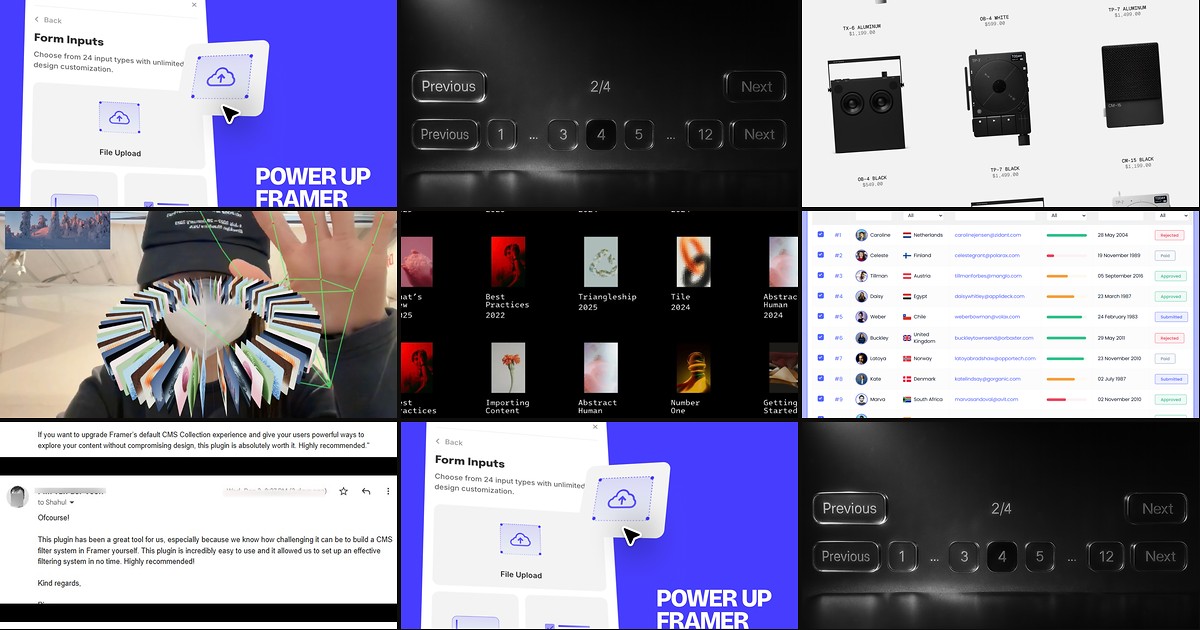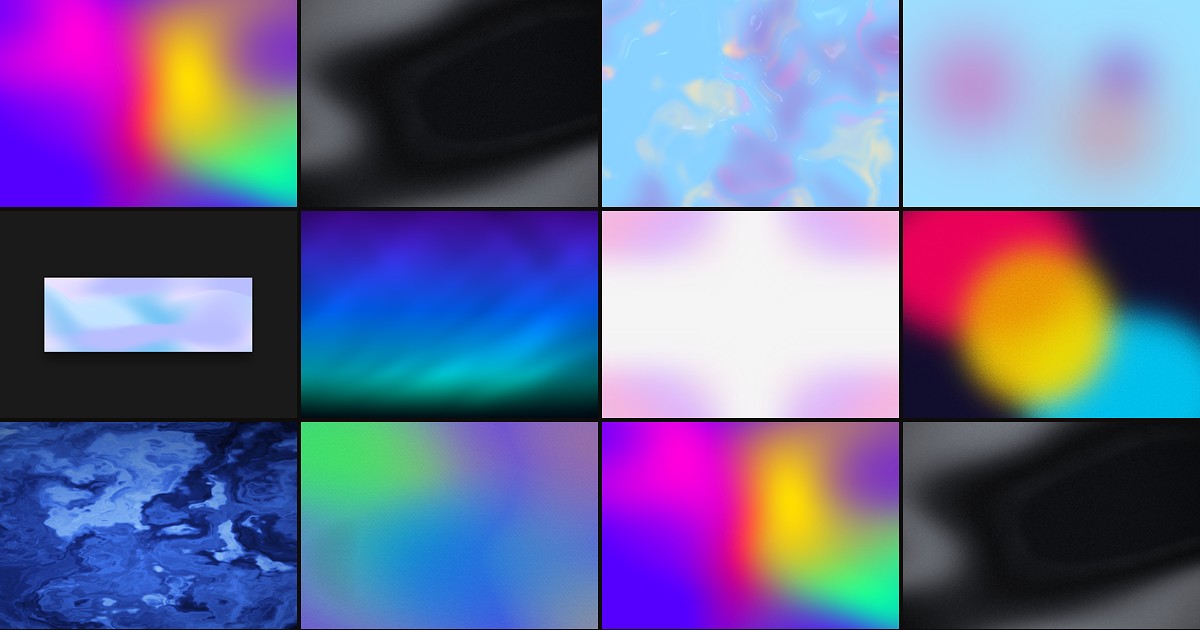
SaaS launches, Web3 landers, and creative portfolios all lean on the same atmospheric trick: a living mesh gradient behind the headline that shifts as visitors scroll or move the cursor. Framer’s native gradients handle flat fills, but production builds want scroll-linked palette stages, WebGL fluid distortion, film-grain texture, and editor-safe fallbacks that do not tank canvas performance. A dedicated framer mesh gradient background component ships those effects with property-panel controls instead of custom shader experiments.
This list ranks ten mesh, aurora, and fluid gradient background components on the Framer marketplace in 2026. Every pick has a live listing, identifiable creator, and working preview — seven paid and three free, spanning scroll-driven WebGL, cursor-reactive shaders, northern-lights curtains, and lightweight CSS heroes for landing pages, storytelling sites, and full-bleed section backgrounds.
Fluid Scroll Mesh — Scroll-driven WebGL mesh with five-color palette stages and liquid distortion
by Alpheratz
Fluid Scroll Mesh is the strongest scroll-native mesh pick on this list: simplex-noise shaders morph between unlimited five-color palettes as visitors move down the page, with warp and blob-size controls that swing from calm aurora skies to turbulent liquid. A CSS radial-gradient fallback keeps the Framer editor responsive while designing, and an optional loop mode wraps palettes on infinite-scroll layouts. At 7 USD it replaces the custom scroll-override plus WebGL stack agencies rebuild on every immersive launch page.
- Best for
- Long-scroll SaaS and Web3 landing pages where background mood should evolve section by section
Affiliate link — we may earn a commission at no extra cost to you.
Fluid Mesh Gradient — Cursor-reactive WebGL mesh with autonomous drift and bloom controls
by SOSOTAR
Fluid Mesh Gradient turns subtle cursor movement into cinematic color morphing through a single-pass WebGL shader — autonomous drift keeps the scene alive when the pointer rests, while grain, bloom, and lag sliders dial the feel from quiet luxury to bold kinetic energy. Preset palettes and custom void-plus-band stops speed brand matching without touching GLSL. Reach for it at 20 USD when the hero must feel interactive on first hover, not just animated on a timer.
- Best for
- Product launches and brand storytelling heroes where background motion should follow the pointer
Affiliate link — we may earn a commission at no extra cost to you.
Fluid Mesh Gradients — Up to five blended colors with transparency support and fluid motion
by artechWeb
Fluid Mesh Gradients from artechWeb focuses on approachable art direction: blend up to five colors with transparency, tune motion from the property panel, and drop the component as a full-bleed background without configuring scroll thresholds or shader physics. It ships beautiful defaults that read premium out of the box, then opens enough controls for brand-specific palettes on feature cards and footers. At 10 USD it is the balanced pick when the brief is one strong mesh atmosphere — not a multi-stage scroll journey.
- Best for
- Marketing sections that need a polished mesh hero without scroll or cursor complexity
Affiliate link — we may earn a commission at no extra cost to you.
Liquid Aura Gradient — Holographic WebGL aura with domain warping and four-point color blending
by Alpheratz
Liquid Aura Gradient renders organic, non-repeating patterns through domain-warped simplex noise — four color inputs mix into deep holographic shifts that feel closer to moving oil than a static CSS blob. Softness and speed sliders let you push sharp liquid detail or a dreamy blurred aura, all on the GPU without video compression artifacts. At 5 USD it is the best-value WebGL atmosphere when the page theme is futuristic rather than pastoral.
- Best for
- AI and Web3 interfaces that need ethereal, oil-slick color movement at a low license cost
Affiliate link — we may earn a commission at no extra cost to you.

Scroll Mesh Gradient — Artifact-free scroll mesh with blurred blobs and unlimited color stages
by Alpheratz
Scroll Mesh Gradient ties palette transitions to scroll depth through Framer Motion and heavily blurred DOM blobs — no WebGL canvas means no harsh clipping lines at section boundaries. Define unlimited color stages with a base tone plus three blob colors per threshold, then let blobs float, rotate, and optionally animate size for organic motion. Choose it over Fluid Scroll Mesh at the same 7 USD price when editor stability and artifact-free blur matter more than GPU shader turbulence.
- Best for
- Storytelling sites that need scroll-linked palettes without WebGL canvas edge clipping
Affiliate link — we may earn a commission at no extra cost to you.
Aurora Background — Northern-lights WebGL curtain with tri-color spectrum and FBM waviness
by Alpheratz
Aurora Background simulates flowing light curtains with fractal Brownian motion — low, mid, and high color layers blend against a custom night sky while flow speed and waviness shape how active the aurora feels. Unlike video loops, the generative shader never repeats identically and stays smooth on the GPU. At 5 USD it is the niche pick when the art direction calls for northern-lights poetry instead of generic startup mesh blobs.
- Best for
- Wellness, nature, and meditation brands that want polar-sky atmosphere behind calm copy
Affiliate link — we may earn a commission at no extra cost to you.

Ethereal Mesh — Rotating corner-color mesh that keeps the center clean for hero content
by Alpheratz
Ethereal Mesh cycles four pastel corner colors through a high-blur aura while keeping the center neutral for text and product shots — a breathing background that adds elegance without competing with foreground layers. CSS-based blurring keeps performance predictable on content-heavy pages, and opacity plus blur sliders blend the effect subtly into light themes. Install it at 5 USD when the layout needs atmospheric mesh without covering the hero message in saturated color.
- Best for
- SaaS and wellness heroes where headlines need a neutral center and soft edge glow
Affiliate link — we may earn a commission at no extra cost to you.
Grainy Mesh Gradient — CSS and SVG grainy mesh with four color points and film-grain texture
by Alpheratz
Grainy Mesh Gradient combines fluid color blending with adjustable film-grain noise — eliminating banding while staying lightweight through native CSS and SVG instead of shaders or video. Four color stops, animation speed, and noise opacity are all exposed in the property panel for quick brand matching. Start here free when the brief is a trending grainy mesh look on a single hero or footer band before budgeting for scroll-linked WebGL.
- Best for
- Startup heroes and feature cards that need retro-modern mesh without WebGL overhead
Affiliate link — we may earn a commission at no extra cost to you.
Motion Gradient — Multi-mode WebGL gradient with flow, vortex, aurora, and mouse interaction
by Mohd Mehraj
Motion Gradient packs multiple WebGL animation modes — flow, vortex, aurora, and layered light waves — with real-time mouse and touch interaction, temperature-based color shifts, and optional vignette plus film grain. Modes can transition seamlessly, so one component covers evolving hero atmospheres without swapping assets mid-build. Mohd Mehraj ships it free, making it the strongest no-cost WebGL option when you want mode variety beyond a single mesh loop.
- Best for
- Interactive landing pages that need one free background with several visual modes
Affiliate link — we may earn a commission at no extra cost to you.
Liquid Gradient — Six-color interactive liquid blobs with ripple distortion and grain
by Troy Miller
Liquid Gradient runs up to twelve animated gradient centers across six customizable colors, with mouse and touch ripples that warp the fluid surface for a tactile hero experience. Three.js shaders target 60fps with pixel-ratio capping, and grain plus intensity sliders match calmer or bolder brand energy. Troy Miller’s free component is the right capstone when scroll stages and aurora shaders are overkill but the hero still needs organic liquid motion behind the headline.
- Best for
- Portfolios and product pages that need touch-reactive liquid backgrounds at zero cost
Affiliate link — we may earn a commission at no extra cost to you.
Quick comparison
| Resource | Price | Type | Best for |
|---|---|---|---|
| Fluid Scroll Mesh | 7 USD | Component | Scroll-linked five-color WebGL palettes |
| Fluid Mesh Gradient | 20 USD | Component | Cursor-reactive cinematic mesh |
| Fluid Mesh Gradients | 10 USD | Component | Five-color fluid mesh without scroll setup |
| Liquid Aura Gradient | 5 USD | Component | Holographic Web3 and AI atmospheres |
| Scroll Mesh Gradient | 7 USD | Component | Artifact-free scroll blobs |
| Aurora Background | 5 USD | Component | Northern-lights generative curtains |
| Ethereal Mesh | 5 USD | Component | Soft corner glow with clean center |
| Grainy Mesh Gradient | Free | Component | Lightweight grainy mesh heroes |
| Motion Gradient | Free | Component | Multi-mode interactive WebGL |
| Liquid Gradient | Free | Component | Touch-reactive liquid blobs |
How to choose the right Framer mesh gradient background
Match motion to narrative structure. Fluid Scroll Mesh and Scroll Mesh Gradient earn their license fees on long storytelling pages where each section deserves a new palette. Fluid Mesh Gradients, Ethereal Mesh, and Grainy Mesh Gradient suit single-hero or above-the-fold bands without scroll configuration. Do not stack two scroll-linked backgrounds on one viewport — pick one atmospheric layer and keep mid-page sections calmer.
Weigh WebGL power against editor comfort. Fluid Scroll Mesh and Liquid Aura Gradient deliver GPU shaders with the most visual drama. Scroll Mesh Gradient and Grainy Mesh Gradient trade maximum turbulence for DOM or CSS stability — better when your team iterates layouts daily and cannot tolerate canvas clipping during design reviews. Test on mid-range phones before committing WebGL to every breakpoint.
Decide between ambient and interactive mesh. Fluid Mesh Gradient, Motion Gradient, and Liquid Gradient react to cursor or touch — ideal for launch pages and portfolios where motion should feel participatory. Aurora Background and Ethereal Mesh stay atmospheric without demanding pointer movement, which keeps focus on copy for wellness and B2B SaaS heroes.
Budget free first, then buy scroll or cursor depth. Grainy Mesh Gradient, Motion Gradient, and Liquid Gradient cover most mesh hero needs at zero cost. Spend on Fluid Scroll Mesh or Fluid Mesh Gradient when the brief explicitly calls for scroll chapters or cursor-reactive cinema — not when a static grainy mesh would satisfy the client.
Our top pick for most Framer builders
If you need one paid background that evolves with page scroll, Fluid Scroll Mesh at 7 USD is the most complete mesh journey — five-color stages, liquid warp controls, and an editor-safe fallback in one install. For cursor-driven launch moments, Fluid Mesh Gradient at 20 USD delivers the strongest interactive shader. On a zero budget, install Grainy Mesh Gradient for retro-modern texture, then add Motion Gradient when you want free WebGL mode switching behind the hero.
Browse Framer templates on yoframer for landing pages with hero-ready layouts, or read our glassmorphism components roundup when frosted surfaces should sit on top of these gradients. More resource roundups live on the Resources hub.
Updated July 2026. We refresh this list as notable mesh gradient components ship, reprice, or go stale.